Showing posts with label Audi. Show all posts

Tuesday, September 25, 2012

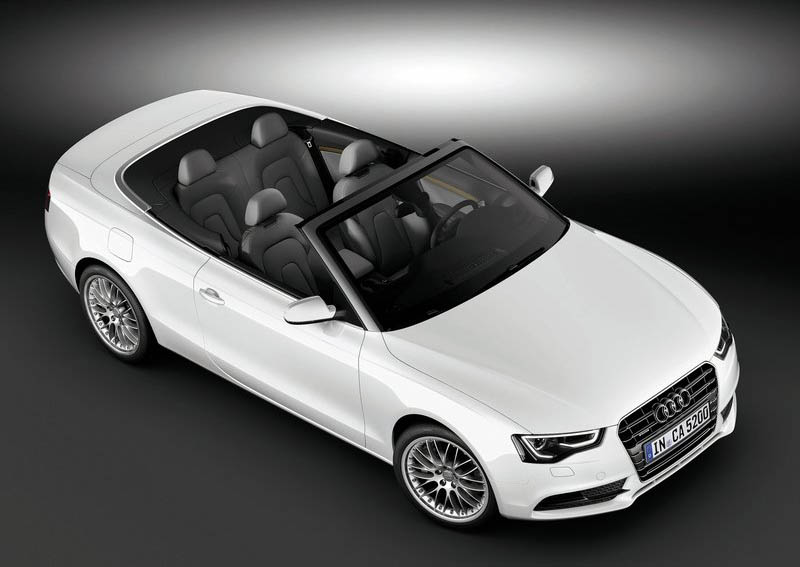
Audi A5 Cabriolet, 2012


  •  Audi A5 Cabriolet, 2012
Audi is refreshing the A5 model series. Advanced technologies are being added to the Sportback, Coupé, Cabriolet and S5 models in the areas of the engine, quattro drive and infotainment for even more efficiency, sportiness and intelligence. The updated design visually underscores the technical expertise involved in these versions.

The Audi A5 models are now more distinctive than ever. The rear lights and the headlights have been redesigned and are optionally available in xenon plus technology with homogenous LED daytime running lights. New colors and materials accentuate the interior, and many details of the operating concept have been fine-tuned.

Each of the four TDI diesel and three TFSI gasoline units in the new engine lineup include forced induction and direct fuel injection. The new 1.8 TFSI features a number of groundbreaking innovations. Fuel consumption has been reduced by 11 percent on average. The start-stop system and the recuperation system come standard with all engine-transmission configurations.

Each engine is matched with the ideal drivetrain - six-speed manual, multitronic, seven-speed S tronic, front-wheel drive or quattro drive. When combined with S tronic, the quattro drivetrain uses the crown-gear center differential and torque vectoring; the sport differential is the perfect complement. The chassis has been more finely tuned, with the optional Audi drive select system and dynamic steering making the Audi A5 even more fun to drive. The electromechanical power steering is new to the Audi A5 family.

The new A5 is a highly intelligent car. Its driver assistance systems have undergone intensive further development. The range of infotainment options now includes the Bluetooth online car phone, which delivers a number of special services and connects the Audi A5 to the Internet.

Exterior design and body
Ever since their debut, the models of the Audi A5 family - the Sportback, Coupé and Cabriolet - have impressed with their elegance. The flowing silhouettes, the sharp lines and the muscular surfaces make strong statements. The product improvement adds sharp new accents to the design.

The upper corners of the single-frame grille in high-gloss black are beveled. The grille's lateral bars and the Audi rings appear to be sculpted. The new bumper features pronounced air inlets with massive struts, revamped grilles and flat fog lights. Sharply chiseled edges give the engine hood a three-dimensional look; the entire front end appears even flatter and wider.

The headlights have also been updated. Their lower edge forms a wave; their interior has been restructured. With the optional xenon plus headlights, the LED daytime running lights form a narrow, homogenous clasp framing the headlight. Audi also offers the adaptive light system with dynamic cornering light and turning light. The rear lights have also been redesigned and are optionally available with continuous LED light strips. The bumper includes a number of additional details.

The product improvement has added a millimeter (0.04 in) to each of the exterior dimensions. The Audi A5 Sportback is 4.71 meters (15.45 ft) long; the Coupé and the Cabriolet 4.63 meters (15.19 ft). The range of colors has been reshuffled and now comprises 16 colors. The fully automatic acoustic top of the Audi A5 Cabriolet is available in four colors. The S line exterior package is available for those who appreciate an even more dynamic look.

The vehicle bodies impress with high rigidity, outstanding crash safety, high vibrational comfort and low weight. The front fenders are made of aluminum for improved axial load distribution. Aerodynamic fine-tuning measures include a lined underbody.

The Interior design
A harmonious balance of proportions and surfaces, fine materials and top-quality fit and finish: The interior of the Audi A5 models reflects the Audi brand culture. It is now more elegant than ever - with new steering wheels, including an option for a flattened ring, new steering column stalks and with narrow chrome clasps framing the control elements.

A button is used to directly adjust the optional seat heating and seat ventilation in three stages. Also updated were the ignition key, the selector lever for the automatic transmission, the button for the optional Audi drive select system and the controls of the high-efficiency air conditioning and multifunction steering wheel. All displays are now illuminated in white.

New paint covers the bezels on the instrument cluster and the center console, and there is also a new selection of upholstery and inlays. The latter are available in Aluminium Trigon or in walnut or natural fine grain ash. Almost all of the interior colors are new. Fine Nappa leather replaces Valcona in the Sportback, and the armrests can also be covered in leather, if desired. The Audi A5 Sportback is also now optionally available as a five-seater.

Another attractive option is the S line sport package. It drapes the interior in black and accentuates it with elegant applications. A sport suspension lowers the vehicle body by 10 millimeters (0.39 in), and 18-inch wheels round out the package. Buyers looking for that special something will find many more customization options in the Audi exclusive range, including the stylish Audi exclusive line with two-tone seat coverings.

Engines
The Audi A5 family sets new standards for sportiness and efficiency. All engines feature forced induction and direct injection for tremendous pulling power. Even the entry-level engine produces 320 Nm (236.02 lb-ft) of torque. The start-stop system and the recuperation system are standard with all engines - no other manufacturer takes such a rigorous approach. The lineup comprises three gasoline engines and four TDI units. CO2 emissions have been reduced by as much as 22 percent.

The completely redesigned 1.8 TFSI showcases the full extent of Audi's expertise. Groundbreaking innovations can be found in the control of the valves and their lift, the thermal management concept, the injection system, the turbocharger and the integration of the exhaust manifold. In the Audi A5 Coupé, the high-end four-cylinder unit consumes on average just 5.7 liters of fuel per 100 km (41.27 US mpg). This best-in-class value corresponds to 134 grams CO2 per km (215.65 g/mile) and is 21 percent lower than before. With 125 kW (170 hp), the 1.8 TFSI accelerates the A5 powerfully.

The output of the 2.0 TFSI remains unchanged at 155 kW (211 hp). New to the Audi A5 lineup is the 3.0 TFSI, a supercharged V6 producing 200 kW (272 hp).

The diesel engines are also impressively efficient, and the four-cylinder units feature modifications in numerous areas. Equipped with the 130 kW (177 hp) 2.0 TDI and a manual transmission, the Audi A5 Coupé consumes on average just 4.7 liters of fuel per 100 km (50.05 US mpg) - a CO2 equivalent of 122 g per km (196.34 g/mile) and a milestone in the coupe segment.

Three V6 diesel units round out the lineup on the top end. The 3.0 TDI with 150 kW (204 hp) is the most fuel-efficient six-cylinder unit in its class worldwide. In the Audi A5 Coupé with multitronic, it consumes on average 4.9 liters (48 US mpg) of fuel and emits just 129 grams CO2 per km (207.61 g/mile). The second variant of the 3.0 TDI produces 180 kW (245 hp). Arriving somewhat later is a particularly low-emissions clean diesel model that will make the Audi A5 the first coupe on the market to meet the Euro 6 diesel standard.

Drivetrain
Audi offers the ideal drivetrain for each engine. A manual six-speed transmission and the continuously variable multitronic are available for models with front-wheel drive. The quattro models come with a manual transmission or the lightning-fast, seven-speed S tronic. All of the transmissions shine with their convenience and precision, high efficiency and wide gear spread. The long ratios in the upper gears reduce fuel consumption.

Members of the Audi A5 family equipped with quattro permanent all-wheel drive and the S tronic transmission also feature the crown-gear center differential with torque vectoring. During normal driving, the mechanical component sends the engine's power primarily to the rear wheels. If necessary, it redistributes the power lightning-fast and smoothly. Up to 70 percent can flow to the front axle, 85 percent to the rear axle. Torque vectoring uses targeted, minor braking interventions to make the handling even more precise.

Available as an option in all Audi A5 quattro models, the sport differential provides for maximum precision and high traction. It uses two superposition stages engaged via multi-plate clutches to actively distribute the torque between the rear wheels as needed.

Chassis
The Audi A5 models set standards for sporty dynamics, luxurious ride comfort and excellent driving safety. Most of the components of the five-link front suspension and the trapezoidal-link rear suspension are made of aluminum. The rear suspension bearings and the damper tuning have been updated for more precise handling and even greater comfort.

The ESP stabilization program with electronic limited slip differential is standard in all front-wheel drive versions of the Audi A5. ESP uses minimal braking interventions at the inside front wheel for even more agility during dynamic driving. The large brakes - with ventilated front and rear discs in many variants - offer excellent stopping power and are very easy to modulate.

17-inch wheels with 225/50 tires are standard. Options include wheels up to 20 inches and 265/30 tires as well as four new wheel designs.

Among the high-end features in the model series is Audi drive select. In the basic configuration, it adjusts the power steering boost, the accelerator characteristic, the shift points of the automatic transmission and the automatic air conditioning. Using a button in the cockpit, the driver can determine whether these components should work in "comfort," "auto," "dynamic" or "efficiency" mode. The latter helps to drive the Audi A5 particularly efficiently. If the car is equipped with a navigation system, there is also an "individual" mode that the driver can largely configure him or herself.
Audi drive select can be combined with additional modules, if desired. These are the sport suspension with damper control, the sport differential and dynamic steering, which steplessly varies the steering ratio by nearly 100 percent as a function of speed.

Another new standard feature in the Audi A5 model series is the electromechanical power steering. An electric motor generates the right amount of boost for the speed being driven. The electromechanical power steering features a direct ratio, reacts instantly and provides precise road feedback. It intervenes slightly to support the driver when braking on a surface with less grip on one side of the car.
The system reduces fuel consumption by up to 0.3 liters per 100 km and up to 7 g CO2/km (11.27 g/mile) because it consumes no energy at all while driving straight.

Assistance systems
The assistance systems in the Audi A5 model series use a variety of technologies to make driving even more controlled. Some of them have been improved with new functions. Among the standard features is the new driver information system with recommendations to take a break. It uses steering motions and additional parameters to detect when the driver is getting tired and issues an appropriate warning.

Audi side assist supports the driver when changing lanes by using radar to monitor the space behind the car. Audi active lane assist - a new feature in the Audi A5 - helps the driver to maintain the lane. A camera detects the lane markings and the system makes slight corrections to the electromechanical steering, if necessary. The adaptive cruise control uses radar technology to maintain a constant interval between the Audi A5 and the vehicle ahead. At speeds below 30 km/h (18.64 mph), it initiates maximum braking in the event of an impending collision.

Infotainment systems
The infotainment systems in the Audi A5 have been significantly upgraded. Audi equips all models in the A5 lineup with a CD radio and eight speakers.

The optional top-of-the-line unit is MMI navigation plus with a large hard drive, seven-inch color monitor, 3D graphics and DVD player. Its controls have been improved. The number of hard buttons has been reduced from eight to four and the volume control now features a joystick cap to make it easier to choose songs. Voice control and digital radio reception also received some fine-tuning.

An additional option is the Bluetooth online car phone. Audi connect is the catchword for the attractive services this phone brings to the A5, which include Google POI search, navigation with Google Earth images and a WLAN hotspot. The hotspot enables passengers to surf the Internet and send and receive e-mail with their mobile devices. Audi traffic information online is an additional service that does a much better job than the familiar TMC standard of providing the driver with extremely precise and current information about the traffic load along the selected route. All the driver needs to use these functions is a data-capable SIM card.

Prices
Despite the extensive product improvement, Audi is raising prices only slightly. The price increase for the Audi A5 Coupé 2.0 TFSI is only €200, for example. The base model, the Audi A5 Sportback 1.8 TFSI, costs €33,350.

The Audi S5
The top models in the series - the S5 as Sportback, Coupé and Cabriolet - have also been refreshed. All S5 models, including the Coupé, are now equipped with the 3.0 TFSI producing 245 kW (333 hp). Compared to the 4.2-liter V8 it replaces in the Coupé, the supercharged V6 consumes on average 20 percent less fuel per 100 kilometers. Average fuel consumption is just 8.1 liters (29.04 US mpg) while performance remains impressive. The S5 Coupé accelerates from 0 to 100 km/h (62.14 mph) in just 4.9 seconds on its way to an electronically governed top speed of 250 km/h (155.34 mph).

Visual cues to the updated S models include new lights, modified body details and new crystal-effect paint finishes. Subtle changes can also be found in the interior. The most important technical updates for the Audi S5 are quattro drive with the crown-gear center differential and electromechanical power steering. The special S sport suspension and the standard 18-inch wheels deliver the power to the road.

Saturday, January 9, 2010

Audi A4 allroad quattro, 2010

Audi A4 allroad quattro, 2010

With its permanent all-wheel drive and increased ground clearance, the Audi A4 can handle any road or trail; it also offers driving pleasure - even on unpaved surfaces. Naturally, the Audi A4 allroad quattro features all the innovative technologies which impart to the A4 model line its superiority: a range of powerful and highly energy-efficient engines, Audi drive select (intelligent handling technology), the high-tech S tronic transmission, and innovative communication and assistance systems. The vehicle will be available in early summer at a basic price of 37,100 euros.

The design of the Audi A4 allroad quattro recalls the Audi A4 Avant: crisp lines enclose tastefully curved surfaces and the low roof line establishes a coupé-like silhouette. Striking details re-interpret this model line's sporty elegance. The moon-gray single-frame radiator grille bears vertical chrome strips; an accentuated bumper and large air inlets underscore this vehicle's unique identity. Chrome rings encircle the fog lights. And in the option featuring xenon plus headlights, light-emitting diodes comprise the daytime running lights and taillights. Underneath the front end and tail end, the A4 allroad has a stainless-steel underbody guard.

Interior
Refined touches, uncompromising quality and flawless functionality: the interior of the Audi A4 allroad quattro embodies all the strengths for which Audi is renowned. The cockpit clearly serves the driver. Among the control unit's highlights: the standard electromechanical handbrake - which has replaced the lever on the center console with a button - and the central on-board monitor. A color display complements the concert or symphony sound system, or the MMI navigation system plus; the MMI's offset control unit is housed in the center console.

Customers can choose one of several different trim materials: an exclusive allroad fabric, two types of leather, or an Alcantara/leather combination. The fabric designs are available in two colors and the leather trim in seven colors (two of which feature sporty contrasting stitching). Standard inlays are micrometallic platinum; options include aluminum trigon, natural fine-grain ash, laurel nutmeg, and walnut brown. Carpeting is made of velour; the headlining is star silver, linen beige, or black (optional). Many of the operating controls gleam thanks to their standard aluminum look; the door sill trims bear special allroad logos.

The Engines
Audi will initially offer three different engines for the Audi A4 allroad quattro: a gasoline engine and two diesel engines. All three are turbocharged direct-fuel-injection engines. They command respect due to excellent performance, impressive pulling power, smooth running, and high fuel efficiency. The engines are further bolstered by pioneering technologies arising from Audi's modular efficiency expertise. For example, all three units boast a standard on-board recuperation system, which converts mechanical energy into electrical energy during deceleration.

The Driveline
The 2.0 TDI transmits its power to a six-speed manual transmission. The 3.0 TDI and 2.0 TFSI feature the next generation of Audi's dynamic and very efficient S tronic. This innovative dual-clutch transmission switches extremely smoothly among its seven gears within a few hundredths of a second. S tronic also excels thanks to its high efficiency ratio and a broad spread of the gear ratios. The seven-speed S tronic has a fully automatic mode at the ready: the driver can shift as required, if necessary via shift paddles on the steering wheel.

The differential is in front of the clutch and immediately behind the engine. This technical stroke of genius made it possible to reposition the front axle much closer to the vehicle's front end, in turn allowing for a long wheelbase and an ideal distribution of the axle loads. The benefits include steady straight-line stability, superb ride comfort, and excellent driving dynamics.

The Audi A4 allroad quattro features quattro permanent all-wheel drive as standard equipment. Its purely mechanical center differential favors the rear, distributing power at a 40:60 ratio to the front and rear axle. If necessary, the quattro permanent all-wheel drive can route up to 65 percent to the front or as much as 85 percent toward the tail end.

The Chassis
The width of the Audi A4 allroad quattro lays the foundation for its driving dynamics. The car's track is 1,583 mm (62.32 in.) at the front and 1,574 mm (61.97 in.) at the rear - some 20 mm (0.79 in.) wider, respectively, than the A4 Avant. The body is higher on account of a new chassis with longer springs, which - like the new shock absorbers - combine sportiness with comfort. The standard, 17-inch lightweight alloy wheels are fitted with 225/55 tires. At a diameter of 690 millimeters (27.17 inches), even this standard configuration looks rather imposing. For the time being, Audi is also offering 18-inch wheels.

The chassis in the Audi A4 allroad quattro retains all the advantages which distinguish the A4 model line. Steering is straightforward and responsive. A steering box beneath the wheel conveys the driver's input directly to the wheels. The five-link front suspension and the self-tracking trapezoidal-link rear suspension consist largely of aluminum to reduce unsprung weight. 16-inch brakes with excellent cooling behavior provide for rapid deceleration. It should come as no surprise that the Audi A4 allroad quattro offers sportiness, comfort, and stability - onroad and offroad. After all, it is an A4.

On rough terrain, the Audi A4 allroad quattro relies on a high-tech feature of its Electronic Stabilization Program (ESP): the Offroad Detection (ORD) technology automatically identifies the type of driving surface and adjusts the ESP's control parameters accordingly. When the driver depresses the gas pedal, ESP increases propulsive power by tolerating more wheel spin than otherwise. If necessary, it will override for a time in the interests of safety.

On paved roads, Audi drive select further enhances the joys of driving. This control system automatically and perfectly adapts the personality of the Audi A4 allroad quattro to the driver's preferences. Audi drive select namely evaluates the engine's throttle response, the Servotronic power steering, and S tronic's shift points in automatic mode. The driver can freely switch among three different engine maps: comfortable, standard, and sporty. And MMI navigation plus provides yet another on-board control option, and is individually programmable.

The Audi drive select can be paired with Audi dynamic steering. It consists of a superimposed gear system, and varies the steering ratio as well as steering assistance in a continuously variable manner. Audi drive select functions directly at low speeds and indirectly at high speeds. At the vehicle's cornering limit, the dynamic steering keeps the Audi A4 allroad quattro on course via split-second corrective actions - subsequently obviating extensive ESP intervention.


Audi A5 Sportback

Audi A5 Sportback

Audi is presenting a new vehicle concept - the Audi A5 Sportback. The five-door model with the long, flowing rear end unites the best of various vehicle genres: the emotion and elegance of a coupe, the comfort of a sedan and the practicality of a station wagon. The Sportback joins the Audi A5 Coupé and Cabriolet as the third member of the Audi A5 model family.

The interior is spacious, offering uncompromising comfort in all four seats. The large luggage compartment hatch is harmoniously integrated into the long, tapered tail end with the flat C pillars; the spoiler lip underscores the tension-filled character. The luggage compartment volume of 480 liters (16.95 cu ft) nearly matches that of the Audi A4 Avant and increases to 980 liters (34.61 cu ft) with the rear seats folded down.
Audi A5 Sportback

The Audi A5 Sportback follows the consistent path of innovative technologies at Audi when it comes to the drivetrain. All of the engines are highly-efficient direct injection models - TDI for the cultivated diesels, FSI for the gasoline engines - and all comply with the Euro 5 emissions standard.

The perfect complement is the Audi drive select vehicle dynamics system, which enables the driver to freely vary the throttle response characteristic, the shifting points of the seven-speed S tronic, and the boost provided by the servotronic steering system, which comes standard (from power outputs of 140 kW (190 hp) upwards). The system is offered as a modular package with at least one of the following three options: sport differential, adaptive shock absorber control or dynamic steering with variable boost.

The Design
The front is marked with horizontal lines. The horizontal bars come to the forefront in the single-frame grille, which is framed with a narrow strip of anodized aluminum. Two lateral edges underscore the presence of the single-frame grille and extend over the hood as a powerful V contour.

Audi uses ellipsoidal halogen headlamps in models with engines below 140 kW (190 hp). The xenon plus units standard on the other models are available here as an option. With these headlamps, the daytime running light is provided by light-emitting diodes (LEDs) arranged in an arched strip. The LEDs are characterized by their distinct appearance and particularly low energy consumption. The dynamic cornering light system known as adaptive light is optionally available for all models.

The Audi A5 Sportback's sporty character is also immediately apparent when viewed from the side. The large wheels - 17-inch wheels are standard with sizes up to 20 inches available as options - are framed by a powerful body with a slender window strip. The C pillar runs rearward in a long, elegant wave. The pillar integrates a narrow third side window with an upward pointing tip - a homage to the Audi 100 Coupé S from 1969.

The Body
The foundation for the qualities that characterize the Audi A5 Sportback is the high body stiffness, which provides the basis for the precise, sporty handling, the superior ride comfort, the high crash safety and the tranquility on board. Oscillations and vibrations are practically imperceptible to the driver and passengers - including those transmitted through the steering wheel and the seat, which comprise the interface to the vehicle.

Audi uses a wide range of state-of-the-art technologies to build the body-in-white. These include hot-shaped steel sheets, most of which are fabricated in the Ingolstadt plant where the Audi A5 Sportback is produced. The tailored blanks of boron alloy steel are heated to 950 degrees Celsius in a continuous furnace and immediately quenched and shaped in a water-cooled die.

This imparts them with an extremely high tensile strength. You could hang six Audi A5 Sportback cars weighing a total of ten tons from a strip of this material two millimeters (0.08 in) thick and 30 millimeters wide (1.18 in). Hot-shaped steels are very light, and profoundly impact the weight balance. The Audi A5 Sportback 2.0 TFSI weighs only 1,500 kilograms (3,307 lb).

Interior and trunk
Thanks to its long wheelbase, the Audi A5 Sportback has a spacious interior in which passengers sitting in all four seats will enjoy plenty of room. The Audi A5 Sportback offers much better leg and shoulder room than the Audi A5 Coupé, its dimensions being only few millimeters short of those of the A4 Sedan.
The long doors open wide to afford very easy entry and exit, and the car has a very unique, coupe-specific touch: All four side windows are frameless.

The Audi A5 Sportback is designed as a four-seater. Compared to the A4, the rear seats are mounted slightly lower and somewhat farther forward. An armrest is standard, with two additional cup holders available as options. The front seats are sportily low and sculpted for perfect ergonomics; they can be precisely adjusted and offer perfect control and support. Audi offers a fine array of options, including sport seats with large side bolsters, extendable thigh rests and a four-way power-adjustable lumbar support in addition to fully power-adjustable seats with an optional memory function. The greatest comfort is offered by the climate-controlled comfort seats, in which small fans with an automatic heating function ensure that the driver and passengers neither sweat nor freeze.

Luxurious interior
The interior of the Audi A5 Sportback is a treat for the senses. Elegant design touches, perfect ergonomics, high-grade materials and uncompromising craftsmanship impart a harmonious overall impression. Teardrop-shaped chrome frames surround the two large instruments and secondary indicators. The high-mounted, central onboard monitor is standard, as is the three-spoke leather sports steering wheel.

Engines
Audi has also consistently turned to innovative technologies for the engines. The Audi A5 Sportback will be available with three TDI and three FSI engines at launch, with three additional engines to follow by mid-2010. All of the engines prove that efficiency and dynamic performance are not mutually exclusive, but rather build on one another. Audi's success in motorsports confirms the power of this philosophy: The R8 FSI and R10 TDI racing cars have recorded eight overall victories in the 24 Hours of Le Mans, the world's most grueling circuit course race.
On the road, the TDIs from Audi have been at the forefront of efficiency technology since their introduction 20 years ago. No other power plant can match the ratio of power to low fuel consumption offered by the turbocharged diesel with direct fuel injection.

Energy recovery standard
Audi uses its new technologies from the modular efficiency platform in the Audi A5 Sportback. All models are equipped with a recuperation system that makes use of the kinetic energy during deceleration. During the coasting and braking phase, the alternator can convert the kinetic energy into electrical energy that is stored temporarily in the battery.
When the five-door coupe accelerates again, the battery feeds the energy back. This improves fuel efficiency by reducing the load on the alternator, which is driven by the engine. Furthermore, all models with a manual transmission are equipped with a gear-change indicator that recommends a gear to the driver for optimal efficiency.

The Chassis
The Sportback draws on all of the high-end skills of the Audi A5 series for the chassis as well. The five-door coupe shines with sporty handling, superior stability and good ride comfort. The Audi A5 Sportback turns in quickly and willingly, takes all manner of corners at high speed and with great stability, finding good traction at the exit point of the curve.

There are a number of good reasons for these strong points. Among the most important are the high body stiffness and the balanced distribution of axle load. As in the entire A5 series, the front axle is moved far to the front of the Sportback as well. This was made possible by the unusual arrangement of the powertrain components. The differential, which determines the position of the axis, is mounted directly behind the longitudinally installed engine and thus in front of the clutch or torque converter. The battery was moved to the luggage compartment for better balance.

A lot of technology went into the chassis itself. All major components of the front and rear suspensions are made of aluminum, which greatly reduces the unsprung masses. The front wheels are mounted on a five-link axle that can absorb separately the longitudinal and lateral forces acting upon it. Bearings are stiff in the lateral direction for sporty precision and soft and supple in the longitudinal direction.

The front axle and the engine are fastened to an auxiliary frame that is rigidly bolted to the front section of the car. The high rigidity facilitates the spontaneous generation of steering force. The steering box, mounted low and far forward, transmits the steering commands directly to the wheels.

The Radar and camera: the assistance systems
A whole range of innovative assistance systems make driving even more relaxing, more controlled and safer. The adaptive cruise control with the integrated Audi braking guard uses radar technology to maintain the distance to the car in front. The integrated Audi braking guard provides the driver with advance warning of an impending collision and assists with braking. Audi side assist also uses radar to make lane changes safer. Audi lane assist uses a camera to help the driver stay in the lane. The Audi advanced parking system uses the rear-view camera to display the area behind the car on the onboard monitor.


Audi R8 Spyder

Audi R8 Spyder 5.2 FSI quattro

Audi R8 Spyder 5.2 FSI quattro - exceptional performance and breathtaking dynamism coupled with the intense sensations of open-top driving. Its lightweight cloth top opens and closes fully automatically; several body parts are made of a carbon fiber composite material.

The Audi R8 Spyder 5.2 FSI quattro makes a powerful statement. The sculptured lines of the emotion-packed, high-performance sports car are a fascinating and unique interpretation of its dynamism. Unlike the Audi R8 Coupé, the Spyder does not have sideblades behind the doors. The side panels and the large cover over the storage compartment for the cloth top are made of a carbon fiber composite. Two arched cowls, which extend to the spoiler lip and include large, integrated air vents, give the rear of the open-top two-seater a powerful profile.

The electrohydraulic soft top opens and closes in 19 seconds, even while driving at speeds up to 50 km/h (31.07 mph). When opened, it folds like a Z into its storage compartment over the V10 engine. The compartment cover opens and closes automatically. The heated glass window, which is separate from the cloth top, is lowered into the bulkhead. It can be independently raised and lowered at the press of a switch, with the top up or down. An additional net-like wind deflector comes standard and can be latched into the bulkhead behind the seats in two easy steps.

The top, which comprises an outer skin of a leakproof textile fabric and the headliner, is fully compatible with high-speed driving. When driving at moderate speeds with the top up, interior noise levels in the Audi R8 Spyder are barely higher than in the Coupé. The bulkhead includes integrated rollover protection in the form of two strong, spring-tensioned plates. Head/thorax side bags in the backrests protect the passengers in the event of a side impact. Full-size airbags stand at the ready in the event of a head-on collision. In a rear-end collision, the integral head restraint system reduces the risk of whiplash injuries.

Close attention to detail: the design
Numerous details demonstrate that the Audi designers put their hearts into the design of the Audi R8 Spyder 5.2 FSI quattro. The air inlets in the nose, which direct air across the three radiators, and the lip of the front skirt are painted high-gloss black. The struts in the broad, low, single-frame grille are finely coated with chrome. The standard full-LED headlights are technical works of art. Their reflectors resemble open mussel shells; the daytime running lights appear to be a homogeneous strip, but actually comprise 24 individual LEDs that form a curve at the lower edge of the headlight.

The full-LED headlights from Audi are unmatched by its international competitors. Light-emitting diodes are used for the low beams, the high beams, the daytime running lights and the turn signals. With a color temperature of 6,000 Kelvin, the LED light is very similar to daylight, making it easier on the eyes when driving at night. Additional strengths include excellent light distribution, long service life and extremely low energy consumption.

The side sills of the Audi R8 Spyder 5.2 FSI quattro are broad and angular. V10 badges on the flanks allude to the power of the engine. A dark surface between the rear lights emphasizes the car's width. The chambers of the lights are colored dark red, with LEDs generating a three-dimensional light pattern. The exhaust system ends in two large, oval tailpipes, and the fully lined underbody ends in an upturned diffuser. The rear spoiler extends automatically at higher speeds.

Interior
The open-top two-seater from Audi features a generously spacious interior. The three-spoke leather multifunction sport steering wheel is flattened at the bottom as in a race car, and the low-mounted, electrically adjustable seats guide and support the body perfectly.

Quality of fit and finish is extraordinary and the controls are clear and logical. The standard driver information system includes a lap timer for recording lap times. The instruments and the gear lever knob feature red rings. The pedals, the footrests and the shift paddles of the optional R tronic are in aluminum look. Highlighting the list of standard equipment are a generous full-leather package featuring Fine Nappa leather, an excellent sound system from Bang & Olufsen, a deluxe automatic air conditioning system and heated seats. Six different interior colors are available.

Many additional fine features documents the top status of the Audi R8 Spyder 5.2 FSI quattro. The leather for the seats are colored with pigments that reflect the infrared component of sunlight, which keeps the seats up to 20 degrees Celsius cooler.

Uncompromising power: the engine
The Audi R8 Spyder 5.2 FSI quattro, which was developed in cooperation with quattro GmbH, dazzles with uncompromising performance. The V10 engine with the aluminum crankcase, much of which is hand-built, follows in the grand motorsports tradition at Audi. The normally aspirated engine produces 530 Nm (390.91 lb-ft) of torque at 6,500 rpm. Peak output of 386 kW (525 hp) is reached at 8,000 rpm, and the rev limit is not reached until 8,700 rpm. Specific power output is 100.9 hp per liter of displacement; each hp only needs to move 3.3 kilograms (7.28 lb) of weight.

The Audi R8 Spyder 5.2 FSI is also available with an optional automatic six-speed transmission. The R tronic offers a normal and a sport program as well as a fully automatic and a manual mode. The manual mode allows the driver to make lightning-fast gear changes using the joystick on the center tunnel or with the paddles on the steering wheel. The open-air sports car also comes with "Launch Control" - a program that manages engagement of the clutch perfectly to maximize acceleration at start.

The quattro permanent all-wheel drive features a central viscous coupling and distributes power to all four wheels with a heavy rear bias. It works together with the locking differential on the rear axle to provide significantly greater traction, stability, cornering speed and precision. It is the superior technology - in particular for a high-performance sports car.

The dazzling performance: the chassis
The Audi R8 Spyder 5.2 FSI quattro has a 2.65-meter (8.69-ft) wheelbase and a 43:57 axle load distribution. Like in a race car, there are double triangular wishbones made of aluminum at all four wheels. The hydraulic rack-and-pinion power steering conveys highly precise road contact.
The chassis is tuned for good comfort, thanks in part to standard Audi magnetic ride technology. This uses magnetic fields in the shock absorbers to adjust their response to road conditions within milliseconds and adapt to the driver's style. The driver can choose between two base characteristics. A sports suspension with conventional shock absorbers is available as an option.

The Audi R8 Spyder 5.2 FSI quattro rolls on 19-inch wheels of 10-spoke Y design. The front rims are shod with 235/35 tires, with 295/30 tires at the back. 305/30 tires are optionally available. The brakes offer impressive performance: The four discs are internally ventilated and perforated, with eight-piston calipers up front and four-piston calipers at the back. Optionally available from Audi are oversized carbon fiber-ceramic discs that are extremely lightweight, robust and long-lived. The ESP stabilization system has a Sport mode and can also be completely deactivated. The brake system includes an assist function that facilitates starting on gradients.


Audi TT RS

Audi TT RS

Audi is once again producing a five-cylinder engine - and a very special one at that. Arriving at dealerships this summer, the Audi TT RS has a turbocharged 2.5-liter engine with direct gasoline injection; it produces 250 kW (340 bhp) and 450 Nm (331.90 lb.-ft.) of torque. The blazing five-cylinder engine enables the Audi TT RS to perform extraordinary feats. In conjunction with quattro permanent all-wheel drive and a high-performance chassis, the engine makes the compact Audi TT RS a top-notch sports car - available as a coupé or roadster.

Sporty five-cylinder gasoline engines have a long legacy at Audi. The most famous is arguably the turbocharged 2.1-liter engine in the Audi quattro. The first version, which was launched in 1980, offered an impressive 147 kW (200 bhp). And the Audi Sport quattro from 1984, directly inspired by motorsport, delivered a whopping 225 kW (306 bhp). For 25 years, turbochargers and quattro have been a dynamic formula for success.

Audi has resumed using this recipe. Designed from scratch, the five-cylinder engine combines a turbocharger with FSI direct gasoline injection to elevate the Audi TT RS to a high-performance sports car. The TFSI delivers 250 kW (340 bhp) from a displacement of 2,480 cc (151.34 cu in): a specific output of 100.8 kW (137.1 bhp) per liter.

The power-to-weight ratio is also outstanding. In the case of the Coupé, which weighs in at a mere 1,450 kilograms (3,196.70 pounds), the power-to-weight ratio is just 4.3 kilograms per bhp. The Audi TT RS Roadster has a weight of 1,510 kilograms (3,328.98 pounds) and a power-to-weight ratio of 4.4 kilograms per bhp - thanks to its extremely lightweight and largely aluminum body constructed as per the Audi Space Frame principle.
Audi TT RS

The Audi TT RS Coupé rockets from 0 to 100 km/h (0 to 62.14 mph) in 4.6 seconds; the Audi TT RS Roadster needs just a tenth of a second longer. The limited top speed of 250 km/h (155.34 mph) is merely the official figure for both versions; as an option, Audi can increase it to 280 km/h (173.98 mph).

Compact and Lightweight: The Five-cylinder TFSI

The ultra-powerful five-cylinder engine is extremely fuel-efficient, requiring an average of just 9.2 liters/100 km [25.57 mpg] as regards the Coupé (Roadster: 9.5 l/100 km [24.76 mpg]). Switchable flaps in the intake manifold mix the incoming air in a calculated configuration. Injected at a pressure as high as 120 bar by the common-rail system, the gasoline swirls intensely in the combustion chamber - which in turn cools the walls. This subsequently facilitates a compression ratio of 10.0:1, which is very high for a turbocharged engine. Both of the adjustable camshafts, controlled via chains, also enhance charging efficiency with respect to the air-fuel mixture.

The large turbocharger generates up to 1.2 bar of boost pressure. The intercooler, fed air ideally by the lower segment of the single frame radiator grille, reduces the temperature of compressed air by over 80 percent at full load.

When an Audi TT RS driver pushes the standard Sport button on the center tunnel, a flap installed in the left exhaust tailpipe renders the exhaust noise even more robust and intense while boosting engine responsiveness. An optional Sport exhaust system is available with matt black tailpipe trims and sound flap.

For Purists: The Driveline

The Audi TT RS is the first classic sports car in the Audi RS family. Like the Audi RS4 and the Audi RS6, the Audi TT RS was developed by quattro GmbH as a pure, no-holds-barred driving machine. A new six-speed manual transmission conveys the engine's tremendous power, and permits easy and precise operation thanks to a specially designed shift lever boasting particularly short shift travel. The transmission's defining characteristics are a high efficiency ratio and a sportily narrow spread of the gear ratios.

The Audi TT RS features quattro permanent all-wheel drive as standard equipment. Its heart lies at the rear axle: an electronically controlled, hydraulic multi-plate clutch. If a situation calls for it, the clutch redirects a majority of the torque input from the front wheels to the rear wheels.

Within milliseconds, a powerful electrical pump in conjunction with an accumulator presses together the clutch's plates via hydraulic pressure. Additions to the quattro powertrain include a constant velocity joint before the propeller shaft and a compact rear-axle differential - both are heavy-duty components.

High-tech Excellence from Audi: Chassis and Body
The chassis of the Audi TT RS builds on the cutting-edge foundation of the base Audi TT design. The four-link rear suspension, which handles longitudinal and lateral forces separately, plays a crucial role. The electromechanical steering is highly efficient and the power steering adjusts to the vehicle's speed. With aluminum in the front and sheet steel in the back, the body's innovative mixture of materials results in a well-balanced axle-load distribution, excellent crash safety, and the outstanding rigidity which lays the cornerstone for the car's precise handling.

The Face of Power: The Exterior
At just 4.20 meters (13.78 feet) in length, the vigorously compact Audi TT RS hints at its explosive potential from the very first glimpse. The front spoiler tapers downward into a splitter, reminiscent of a racing car. The large and squared air inlets have diamond-shaped inserts. And the high-gloss black single frame grille with a frame in matt aluminum look and the TT RS badge bear the same styling. The xenon plus headlights with LED daytime running lights notify faraway drivers that an Audi TT RS is approaching.

The sides of the vehicle are accentuated by large wheels in 5 twin-spoke design, vigorous side sills, and exterior-mirror casings in matt aluminum look. At the tail end, the two large oval exhaust tailpipes - spaced apart - are encircled by a diffuser insert. Here, too, is a TT RS badge. A stationary rear spoiler is standard, though customers can opt for one which automatically extends and retracts. Thanks to a drag coefficient of just 0.3, the 2+2-seat coupé and the two-seat roadster glide effortlessly through the wind. Audi offers the TT RS in eight colors. Among them are four exclusive options: Daytona Gray, pearl effect; Mugello Blue, pearl effect; Sepang Blue, pearl effect; and Suzuka Gray, metallic. The Audi TT RS Roadster's soft top comes in black or dark gray.

The Interior and Equipment Packages
The dynamic exterior of the Audi TT RS is matched by the interior. The leather multifunction sports steering wheel has an especially thick rim, is flat-bottomed, and is covered with perforated leather. Integrated in the instrument panel, the driver information system can display boost pressure and oil temperature as well as a lap timer for chronicling feats at the racetrack. The door handles consist of two slim strips - typical of Audi RS models. An automatic climate-control system and the concert sound system are standard, as are an electrohydraulic soft top and an electric wind deflector for the Audi TT RS Roadster.


Friday, October 23, 2009

Audi e-tron Concept


Audi presents the highlight of the IAA 2009: the Audi e-tron Concept, a high-performance sports car with a purely electric drive system. Four motors - two each at the front and rear axles - drive the wheels, making the concept car a true quattro. Producing 230 kW (313 hp) and 4,500 Nm (3,319.03 lb-ft) of torque, the two-seater accelerates from 0 to 100 km/h (0 - 62.14 mph) in 4.8 seconds, and from 60 to 120 km/h (37.28 - 74.56 mph) in 4.1 seconds. The lithium-ion battery provides a truly useable energy content of 42.4 kilowatt hours to enable a range of approximately 248 kilometers.

The performance figures are by no means the only evidence of the consistent and holistic strategy. The design makes it clear that the Audi e-tron Concept belongs in the major leagues of sports cars, and the package takes into account the specific realities of an electric vehicle. The battery is directly behind the passenger cabin for an optimal center of gravity and axle load distribution.

The Audi e-tron Concept is able to freely distribute the powerful torque of its four electric motors to the wheels as required. This so-called torque vectoring allows for dazzling dynamics and an undreamed-of level of agility and precision when cornering.

Audi has taken a new and in some cases revolutionary approach to many of the technical modules. A heat pump is used to efficiently warm up and heat the interior. The drive system, the power electronics and the battery are controlled by an innovative thermal management system that is a crucial component for achieving the car's range without compromising its high level of interior comfort. Networking the vehicle electronics with the surroundings, which is referred to as car-to-x communication, opens new dimensions for the optimization of efficiency, safety and convenience.

Electric drive systems are still very much outsiders. The first vehicles of this type took to the roads around 1900, yet in 2009 no volume car manufacturer has a car powered exclusively by batteries in its lineup. Fewer than 1,500 electric vehicles are currently registered in Germany, corresponding to only 0.035 percent of all registered vehicles.

Yet electric driving potentially offers numerous advantages. Electric cars reduce the dependence of transportation and the economy on the raw material petroleum. They produce no direct exhaust emissions and thus ease the local burden on the environment. Electric drive systems are also significantly more efficient than combustion engines, consequently making them easier on the customers' wallets. Other strengths include sportiness and the fun they bring to driving. All of the torque is essentially available the moment the driver steps on the accelerator, allowing for breathtaking acceleration.

There is still a lot of work to do before electric cars are ready for volume production, however. The greatest challenge is the integration of the energy storage system. Acceptable range and performance requires a traction battery that is heavy and takes up a lot of space. Audi is taking a new approach to offset these disadvantages - a holistic approach with a specific vehicle package, a systematic lightweight construction concept and an optimal configuration of all components for the electric drive.

Audi e-tron Concept - The Holistic Approach

The most important development related to batteries for electric drives are lithium-ion cells. Numerous experts throughout the world are working on their further development for use in cars, with the primary objectives being to reduce weight and increase capacity and performance. Audi has also opted for this technology, both for use in a hybrid production vehicle, such as the upcoming Q5 hybrid, and in the e-tron test platform.

The requirement specification for the concept vehicle goes far beyond battery technology and the replacement of the combustion engine with an electric drive system, however. The Audi development engineers decided back in the concept phase to design practically every component and technology based on the new requirements of electric mobility. The interaction of all elements has a decisive influence on the factors efficiency, range and practicality.

The Audi team therefore focused its attention on the total vehicle, which is reflected in the comprehensive requirement specification.

* The reduction of road resistances and the resulting increase in range plays a major role with electric vehicles. Lightweight construction was therefore a top priority for the Audi e-tron Concept car. The body, in particular, combines low weight with supreme strength and rigidity. An intelligent aerodynamics concept with active elements helps to reduce consumption.
* The package ensures the safe integration of the electric drive system and the battery. Placing the battery in front of the rear axle ensures an optimal axle load distribution without compromising the compact overall design and the generous amount of interior space.
* Advanced battery technology enables a practical range. The battery system is water-cooled for optimal performance and service life.
* A needs-based energy management system controls all functions for the chassis, convenience equipment and other auxiliary consumers.
* The innovative thermal management system with optimally matched cooling and heating components considers the cooling requirements of the battery and the drive system in addition to the interior temperature.
* Driving dynamics and road comfort are what Audi customers have come to expect in the sports car segment.
* Vehicle safety is on par with the best of today's production vehicles.
* The driver is provided with clear and comprehensive information.
* The Audi e-tron Concept car uses car-to-x communication technology developed by Audi to improve the efficiency of conventionally powered vehicles. For example, information about traffic light cycle times and the flow of traffic - provided by the infrastructure and other vehicles - is used to compute an optimal driving strategy. Audi has already modeled such a solution in Ingolstadt as part of its "travolution" project.

Design and Package

The caliber of the car is apparent to the observer at first glance. The Audi e-tron Concept has a wide, powerful stance on the road. The car body seems almost monolithic; the closed rear end appears powerful and muscular. The trapeze of the single-frame grille dominates the front end and is flanked by two large air intakes. The top of the grille merges into the flat strips of the adaptive matrix beam headlamp modules with their clear glass covers. High-efficiency LED technology is used for all lighting units - a matter of honor for Audi as the worldwide pioneer in this field.

The headlamps are the core of a fully automatic light assistance system that reacts flexibly to any situation. The new technology recognizes weather conditions and adapts the illumination to rain or fog. The technology at the heart of the light assistance system is a camera that works together with a fast computer to detect oncoming traffic, recognize lanes and measure visibilities, such as in the event of fog.

If there is oncoming traffic, for example, the high beams are turned off in the corresponding section of the illumination field. The cornering light system analyzes data from the navigation system and illuminates corners before the driver steers into them. The Audi e-tron Concept does not have conventional fog lamps that consume additional power. It instead intelligently varies the low beams to widen the illumination field, thus significantly reducing the glare from the car's own lights.

The variability of the headlamps is also reflected in their design. The LED elements change appearance and thus the character of the front end of the vehicle depending on the speed driven and the ambient conditions. The innovative lighting technology offers the Audi designers almost as much design freedom as the shape of the body does.

A new design element unique to the Audi e-tron Concept are the air intakes in the single-frame grille and in front of the rear wheel wells. They are closed flush under normal circumstances and opened by means of flaps when additional cooling air is required. Maximum efficiency is also the reason behind this measure. The concept car has a remarkably low drag coefficient, which gets even better when the flaps are closed.

The vehicle body is compact. The sweeping line of the front end and the flat curved roof immediately identify the two-seater as an Audi. The contours of the flanks are familiar. The tapering of the dynamic line above the sill and the shoulder line tie together the front end, the side and the rear, lend a plastic quality to the doors and the transition to the side air intake and sharply emphasize the Audi-typical round wheel wells with the large, 19-inch tires.

1.90 meters (74.80 in) wide, just 4.26 meters (167.72 in) long and 1.23 meters (48.43 in) tall - those are the proportions of a supercar. The wheelbase of 2.60 meters (102.36 in) leaves plenty of room between the axles for people and technology. Like with a mid-engined sports car, the cabin of the Audi e-tron Concept is shifted far forward toward the front axle, leaving room in front of the rear axle for the roughly 470 kilogram (1036.17 lb) battery unit, the inverter and the power electronics.

The two electric motors, which have their own cooling system, are mounted behind the rear axle. The front electric motors are mounted on the front axle, with their cooling system arranged in front of them. This special package, which features a 42:58 weight distribution, ensures perfect balance, which contributes to the driving dynamics of the Audi e-tron Concept.

Systematic lightweight construction is an even more important prerequisite for efficiency and range with electric vehicles than for conventionally powered automobiles. The Audi development engineers drew on the core competence of the company for the Audi e-tron Concept. The body structure is based on Audi Space Frame (ASF) technology and was realized as a hybrid construction. All add-on parts - doors, covers, sidewalls and roof - are made of a fiber-reinforced plastic.

The combination of aluminum and carbon fiber-reinforced composite material guarantees supreme rigidity coupled with low weight. Audi will soon use this technology in a similar form for production vehicles. Despite the complex drive system layout with four electric motors and a high-capacity battery system, the total weight of the Audi e-tron Concept is only around 1,600 kilograms (3527.40 lb).

The Interior and The Control Concept

Optical and functional references to the new drive concept characterize the interior design. They establish an advanced connection between proven Audi genes and new formal hallmarks. Typical for the Audi design language is the reduction of the architecture, controls and flow of information to the essential in favor of visible lightweight construction and a tidy overall impression.

The dash appears to float and has a curve that extends laterally into the door panels. With no need to allow for a transmission, shifter and cardan tunnel, the designers took advantage of the opportunity to create a particularly slim and lightweight center tunnel and center console. The flush gear selector, with which the driver chooses between the modes forward, reverse and neutral, emerges from the tunnel when the vehicle is started.

The cockpit of the Audi e-tron Concept is also oriented toward the driver - a further characteristic Audi trait. Instead of the classic instrument cluster, the concept car is the first Audi to be equipped with a large, fold-out central display with integrated MMI functions. It is flanked by two round dials.

The MMI is controlled via a scroll pad with a touch-sensitive surface on the steering wheel ("MMI touch") - an element inspired by modern smartphones.

While an analog speedometer on the right provides speed information, the instrument on the left tells the driver how much power is being drawn. The central display shows the range in the status bar and presents all key information from the infotainment and navigation systems. It also provides the driver with relevant data from the vehicle's communication with its surroundings. The instruments combine the analog and the digital worlds into a single unit.

Characteristic for the concept of the Audi e-tron Concept is the near total elimination of switches and small components such as the ignition. The climate control unit is located to the right above the steering wheel. The display provides temperature and ventilation information. Again drawing inspiration from a smartphone, the system is controlled by means of a touch-sensitive sliding control.

The racing-inspired lightweight bucket seats combine excellent lateral support with comfort. To contrasting colors - snow white and cognac - delineate the various zones of the interior. The colors and the high-quality materials combine elegance and sportiness.

Drive System and Energy Supply

Four asynchronous motors with a total output of 230 kilowatts (313 hp) give the Audi e-tron Concept the performance of a high-output sports car. The concept car can accelerate from 0 to 100 km/h (0 - 62.14 mph) in 4.8 seconds if necessary, and goes from 60 to 120 km/h (37.28 - 74.56 mph) in 4.1 seconds. The torque flows selectively to the wheels based on the driving situation and the condition of the road surface, resulting in outstanding traction and handling.

The top speed is limited to 200 km/h (124.27 mph), as the amount of energy required by the electric motors increases disproportionately to speed. The range in the NECD combined cycle is approximately 248 kilometers (154 miles). This good value is made possible by the integrated concept: technology specially configured for the electric drive system combined with state-of-the-art battery technology. The battery block has a total energy content of roughly 53 kilowatt hours, with the usable portion thereof restricted to 42.4 kWh in the interest of service life. Audi uses liquid cooling for the batteries.

The energy storage unit is charged with household current (230 volts, 16 amperes) via a cable and a plug. The socket is behind a cover at the back of the car. With the battery fully discharged, the charging time is between 6 and 8 hours. A high voltage (400 volts, 63 amperes) reduces this to just around 2.5 hours. The Audi engineers are working on a wireless solution to make charging more convenient. The inductive charging station, which can be placed in the garage at home or also in special parking garages, is activated automatically when the vehicle is docked. Such technology is already used today in a similar form to charge electric toothbrushes.

The battery is charged not only when the car is stationary, but also when it is in motion. The keyword here is recuperation. This form of energy recovery and return to the battery is already available today in a number of Audi production models. During braking, the alternator converts the kinetic energy into electrical energy, which it then feeds into the onboard electrical system.

The Audi e-tron Concept, which is slowed by four lightweight ceramic brake discs, takes the next large step into the future. An electronic brake system makes it possible to tap into the recuperation potential of the electric motors. A hydraulic fixed-caliper brake is mounted on the front axle, with two novel electrically-actuated floating-caliper brakes mounted on the rear axle. These floating calipers are actuated not by any mechanical or hydraulic transfer elements, but rather by wire ("brake by wire"). In addition, this eliminates frictional losses due to residual slip when the brakes are not being applied.

This decoupling of the brake pedal enables the Audi e-tron Concept's electric motors to convert all of the braking energy into electricity and recover it. The electromechanical brake system is only activated if greater deceleration is required. These control actions are unnoticeable to the driver, who feels only a predictable and constant pedal feel as with a hydraulic brake system.

Making its Automotive Debut: The Heat Pump

The heat pump - used here for the first time ever in an automobile - also serves to increase efficiency and range. Unlike a combustion engine, the electric drive system may not produce enough waste heat under all operating conditions to effectively heat the interior. Other electric vehicles are equipped with electric supplemental heaters, which consume a relatively large amount of energy. The heat pump used by Audi - and commonly used in buildings - is a highly efficient machine that uses mechanical work to provide heat with a minimum input of energy.

A high-efficiency climate control system is used to cool the interior. It works together with the thermal management system to also control the temperature of the high-voltage battery. The battery, the power electronics and the electric motors must be kept at their respective ideal operating temperatures to achieve optimal performance and range.

As soon as the vehicle is connected to a charging station the vehicle is preconditioned as appropriate by the thermal management and other associated systems.

The drive system is heated if temperatures are cool, and cooled if hot. This preconditioning can also be extended to the interior, if necessary, so that the passengers can step into a cabin that has been heated or cooled as appropriate for their comfort.

Driving Dynamics

The normal distribution of the tractive power is clearly biased toward the rear axle in accordance with the weight distribution of the Audi e-tron Concept. Similarly to a mid-engined sports car, roughly 70 percent of the power goes the rear and 30 percent to the front. If an axle slips, this balance can be varied by means of the four centrally controlled electric motors. The electric vehicle from Audi thus enjoys all of the advantages of quattro technology.

The four individual motors, which in the interest of greater traction are installed behind the wheels as wheel drives, also enable the Audi e-tron Concept's lateral dynamics to be intelligently controlled. Similar to what the sport differential does in conventional quattro vehicles, torque vectoring - the targeted acceleration of individual wheels - makes the Audi e-tron Concept even more dynamic while simultaneously enhancing driving safety. Understeer and oversteer can be corrected by not only targeted activation of the brakes, but also by precise increases in power lasting just a few milliseconds. The concept car remains extremely neutral even under great lateral acceleration and hustles through corners as if on the proverbial rails.

The chassis has triangular double wishbones at the front axle and trapezoidal wishbones made of forged aluminum components at the rear axle - a geometry that has proven in motorsports to be the optimal prerequisite for high agility, uncompromising precision and precisely defined self-steering behavior. A taut setup was chosen for the springs and shock absorbers, but it is still very comfortable.

The direct rack-and-pinion steering gives finely differentiated feedback. Its electromechanical steering boost varies with speed, so that the Audi e-tron Concept only has to provide energy while steering, and not while driving straight ahead.

As befitting its status, the Audi concept car rolls on 19-inch tires with a new blade design. 235/35 tires up front and 295/30 tires in the rear provide the necessary grip.

Car-to-x Communication

The electronics development engineers at Audi not only aimed to make the Audi e-tron Concept as efficient and fun to drive as possible, they were also very concerned with safety and traffic management. The technical concept car includes a prototype of an information processing system. Future generations of these systems will usher in a new era in the networking of road traffic, particularly in regions and countries with a high volume of traffic. This progress is made possible by the rapid advancements in computing power, software and communication technology.

The buzzword "car-to-x communication" refers to the direct exchange of information in flowing traffic and to the traffic environment. The letter "x" is a free variable that can refer just as easily to other vehicles as to fixed infrastructure such as traffic lights. In contrast to today's telematic systems, car-to-x communication no longer requires a central service provider to quickly and effectively pool and process information. The participants themselves perform these tasks by spontaneously networking with one another.

The future car-to-x network still needs some time before it becomes reality on the roads. This obstacle is one that can be overcome, however, as nearly every carmaker in Europe, the U.S.A. and Japan has decided to develop a common standard for hardware and software. Once all new cars are equipped with this technology, a functional network of automotive transmitters will soon be available, at least in large population centers.

These transmitters can be used to open up many new practical applications. Below are just four examples showing the possibilities offered by car-to-x communication.

Example 1 - Efficiency and range: Numerous external factors influence energy consumption and thus the range of any vehicle. An intelligent vehicle equipped with car-to-x technology is aware of necessary braking or acceleration maneuvers in advance because it combines navigational data with information about the flow of traffic, for example. The central computer can prevent driver actions that would use energy unnecessarily or use targeted braking for recuperation of the battery.

Example 2 - Safety: A vehicle has spun out on a slippery road in a blind curve and is unable to free itself under its own power. At the same time, other vehicles are approaching quickly. The stuck vehicle uses car-to-x to send out a warning signal reporting the precise location of the hazardous location. A corresponding warning then appears on the navigation system display of the approaching cars.

Example 3 - Traffic flow: Many cars are traveling between traffic lights on an arterial road. Over and over again, they accelerate only to have to brake again when the traffic light changes to red. Car-to-x technology enables them to establish a network between themselves and receive information from the traffic light controller. The drivers can then make more judicious use of the gas pedal because they know what to expect. The same applies for imminent traffic jams: cars ahead provide information that results in adjustments to the posted speed limits, noticeably spreading out the traffic.

Example 4 - Convenience: The driver has entered a shopping center with a chronic shortage of parking spaces into his navigation system as the destination. With car-to-x, the mobile system networks with the parking space registration system at the destination. When the system in the parking garage reports that a convenient parking spot is available, the navigation system can register its location and also reserve the spot.


Monday, April 13, 2009

Audi: S5 Cabriolet, 2010

The engine in the Audi S5 Cabriolet is a newly developed, supercharged, three-liter V6. The pressure in the 3.0 TFSI is generated by a mechanical supercharger - with impressive results: The power output tops out at 245 kW (333 hp), the torque between 2,900 and 5,300 rpm remains constant at a generous 440 Nm (324.53 lb-ft). The powerful thrust and the spontaneous, aggressive response make for a fascinating driving experience. The Audi S5 Cabriolet is catapulted in 5.6 seconds from zero to 100 km/h (62.14 mph) and accelerates up to a preset top speed of 250 km/h (155.34 mph). Yet at 9.6 liters per 100 km (24.5 US mpg), its fuel efficiency is highly impressive (preliminary values).
Standard equipment of the Audi S5 Cabriolet includes the servotronic, the seven-speed S tronic and the quattro drive system package. The sport differential is optional. A sport suspension keeps the body close to the road. The 18-inch cast aluminum wheels are equipped with 245/40 tires. The black brake calipers are emblazoned with S5 emblems. The acoustic top, xenon plus headlights, electrically adjustable sport seats with Alcantara leather upholstery, and a multifunction sport steering wheel are also standard equipment.
Diverse design features contribute to a distinctively sporty styling, including modifications at the lower front and back panels, at the air intakes and at the tailpipes. In the interior, special seat upholstery, door sill trims and inlays in matt brushed aluminum underscore the high-quality, dynamic style of the high-end model. The pointers of the instruments are illuminated white to contrast with the gray scales.

Audi A5 Cabriolet
Dynamic and wonderful to look at, the new Audi A5 Cabriolet is a real Audi, and an especially exciting one at that. The four-seater with the fabric top combines a sporty character with the fascination of open-top driving, refined comfort, and great everyday utility. Seven powerful engines, an agile suspension and a wide range of high-end options make the new Audi model the most attractive mid-range convertible. The top-of-the-line model of Audi's new family of convertibles is the Audi S5 Cabriolet. The engine of the S5 Cabriolet is the newly developed, supercharged three-liter V6 with gasoline direct injection. Prices start at EUR 37,300 for the 1.8 TFSI with 118 kW (160 hp) and six-speed manual transmission. Delivery of the first Audi A5 Cabriolet models will begin in the second quarter of 2009.
Like all open-top Audi models, the new Audi A5 Cabriolet too has a classic fabric top - which endows it with a striking silhouette of dynamic elegance. The lightweight softtop opens in 15 seconds - and closes in 17 seconds. The fully automatic open/close drive comes as standard. An acoustic top is optionally available, which reduces wind noise almost to the hardtop level.

When opened, the Audi A5 Cabriolet top folds down so effectively that very little trunk space is used up - leaving 320 liters (11.3 cu ft) of unused storage volume, clearly the best value in its field of competitors. The softtop compartment lowers itself automatically when the top is opened.

Equally useful is the fold-down rear seat backrest with the large pass-through between the luggage space and the interior, which increases the storage volume to a generous 750 liters (26.49 cu. ft.).

Automatic seat belt extenders round out the comfort in the interior. Neck-level heating is optionally available for the front seats. The optional leather seats are coated with a special layer to reduce solar heating. There is comfortable room for four persons. The refined ambiance combines with exemplary ergonomics to convey an atmosphere of sporty elegance. Ultra-high-strength steels and selective reinforcements of the body ensure maximal rigidity and crash safety.
The Audi A5 Cabriolet is being launched with three gasoline engines and two diesel engines, with power outputs ranging from 132 kW (180 hp) to 195 kW (265 hp). All five powerplants are fueled via direct injection; four of them use turbocharging. Available power trains include a six-speed manual transmission, the continuously variable multitronic, and the lightning-fast, seven-speed S tronic.
In addition to front-wheel drive, Audi also offers quattro permanent all-wheel drive for the higher-power engines. The innovative sport differential, which variably distributes the propulsive power between the rear wheels, is optionally available to make quattro even more dynamic and even safer.

Fascinating dynamics: Audi drive select
The perfect addition to this technology package is the Audi drive select vehicle dynamics system, which enables the driver to chose among three different engine maps controlling the characteristics of the fuel feed, the shifting points of the seven-speed S tronic and multitronic, and the mode of operation of the servotronic steering system. If the MMI operating system is installed, a fourth, freely programmable level is also available.

Audi drive select is only available in combination with one or more of three additional technologies - the sport differential, the adaptive control for the shock absorbers, and dynamic steering. This is an additional high-tech solution: Its superposition gear varies the gear ratio as a function of the driving speed by up to 100 percent.
The new Audi A5 Cabriolet features a rich array of equipment, including 17-inch alloy wheels, automatic air conditioning, and an audio system with a CD player. One of the highlights among the optional equipment is the third-generation MMI operating system, which provides many attractive navigation and entertainment functions.

As the dynamic top-of-the-line model of the new production series, the Audi S5 Cabriolet occupies a very special position. Its three-liter TFSI - a V6 with turbocharger - unfolds its 245 kW (333 hp) and 440 Nm (324.53 lb-ft) of torque impressively: It responds tenaciously to the throttle and delivers excellent driving performance. The quattro drive, a sport suspension with 18-inch wheels and a number of special equipment details underscore the athletic power of the Audi S5 Cabriolet.

The exterior design
The Audi A5 Cabriolet combines Audi's progressive styling with the fascination of an open-top car. The long engine hood, the sharp lines, the sweep of the shoulder contour, the elegantly curved surfaces, the large wheels, the distinctive front end, and the expressive tail all interact to create a sculptural, sensuous whole. The Audi A5 Cabriolet is 4.63 meters (15.19 ft) long and 1.85 meters (6.07 ft) wide, but only 1.38 meters (4.53 ft) tall: the sportiest proportions in its class.
The styling of the front end is dominated by the single-frame grille, which is flanked by large air intakes. The exquisite design of the headlights makes them look like technical jewels. The daytime running lights of the optional xenon plus headlights consist of LEDs. An aluminum molding lends high gloss to the windshield frame.
The looks of the tail end are sharpened by horizontal lines, broad tail lights, straight tailpipes, and a distinctly colored diffuser insert. The trunk lid bears an unobtrusive spoiler lip. The xenon plus headlight option comes complete with LED taillights, which create a distinctive light pattern.

The convertible top
The fabric top with the large glass rear window fits smoothly into the design profile. This is one of several reasons why Audi preferred it to a folding steel roof. What's more, its construction is much lighter in weight, which reduces the overall weight of the Cabriolet and lowers its center of gravity. The outer skin of the top is available in a choice of four colors, the inside in three.
The softtop consists of three layers. The intermediate layer is a cushioning pad. In the optional acoustic top, which reduces wind noise almost to hardtop level, this is replaced by a foam layer up to 15 millimeters (0.59 in) in thickness. The acoustic top comes with a ceiling light for the rear seat - a solution usually only found in the topmost convertible luxury segment.
In both versions, a hydraulic pump and four operating cylinders that move the top are actuated when a pushbutton on the central console or on the optional remote access assistant is depressed. It takes 15 seconds to open the top, 17 seconds to close it. Both actions can also be actuated while driving at up to 50 km/h (31.07 mph) - which makes driving much more comfortable.

When opened, the top is retracted underneath a fixed cover, where it is folded down into an extremely compact shape. Its storage compartment, which automatically lowers itself into the trunk space, only takes up a few centimeters in height - and only 60 liters (2.12 cu ft) of the 380 liters (13.42 cu ft) of luggage space. The remaining 320 liters (11.3 cu ft) with the top open are by far the best value among comparable vehicles. What's more, the low position of the loading lip makes loading and unloading easier. The wind deflector, which is supplied as standard, can be stored in the spare-wheel well to save space.
A very convenient feature in the Audi A5 Cabriolet are the split folding rear seat backrests. They can be easily unlocked by actuating levers in the trunk and drop automatically onto the seat cushions. The standard pass-though is 70 centimeters (27.56 in) wide. The loading space behind the front seatback is 1.76 meters (69.29 in) long, providing a total storage volume of 750 liters (26.49 cu ft).

The body
As is typical of Audi models, the A5 Cabriolet has an extremely rigid body. This is a prime reason for its precise driving performance, its high comfort level, and its maximized crash safety.
In the construction of the body-in-white, several innovative technologies are used. A prime example are the ultra-high-strength steels with their extremely high tensile strength, which Audi manufactures in-house using hot forming. The front fenders of the Audi A5 Cabriolet are made of aluminum to lower the weight and to optimize axle load distribution. An enclosed underbody improves the airflow and thereby the fuel efficiency.


The interior
With its generous wheelbase of 2.75 meters (9.02 ft) and the longest interior in its class, the Audi A5 Cabriolet has plenty of room for longer trips. That's also true for the rear seats, which can be optionally divided by a center console with two cup holders.
Elegance in flowing lines, functional ergonomics, and top-quality craftsmanship are the principal characteristics of the interior - and this too is typically Audi. The teardrop-shaped settings of the instruments have already become modern classics. The centrally mounted onboard monitor is standard equipment. The formed-plastic console focuses on the driver. Flowing lines link it to the central tunnel and the door linings. If the customer has ordered either one of the two navigation systems it comes with the highly convenient MMI operating system - the best solution on the market.
The low standard seats provide excellent control and support. Using seatbelts is facilitated by electric seat belt extenders. Special solutions are available as alternatives: firm sport seats, electric seat adjustment and heating - as a separate option also for the back seats.
In the climate-controlled comfort seats, small fans and an automatic auxiliary heater ensure luxurious comfort. This option provides neck-level heating - ducts on the topside of the seatback emit warm air that keeps the back of the head and neck warm. With its three-level control, the headroom heater is also available for sport seats. It prolongs the open-air season in the Audi A5 Cabriolet.


The engines
In the propulsion system of the A5 Cabriolet too Audi has consistently relied on innovative technologies: All five engines - the two TDIs and the three gasoline engines - use direct injection. They are impressive evidence that, at Audi, efficiency and dynamics go together and are interdependent.
The most powerful gasoline engine in the Audi A5 Cabriolet is the 3.2-liter FSI. It operates with the innovative Audi valvelift system, which varies the lift of the intake valves in two stages. As a result, the gas exchange improves and the throttle can be left open more often, minimizing throttling losses - which in turn boosts the torque and the power output while reducing fuel consumption. The V6 delivers up to 195 kW (265 hp) as well as 330 Nm (243.4 lb-ft) between 3,000 and 5,000 rpm. With front-wheel drive and multitronic it accelerates the Audi A5 Cabriolet in 6.9 seconds to 100 km/h (62.14 mph) - and up to a top speed of 246 km/h (152.86 mph). Its average fuel efficiency is an impressive 8.6 liters/100 km (27.35 US mpg). An optional alternative is quattro all-wheel drive, combined with the new seven-speed S tronic.
The 2.0 TFSI likewise attests to Audi's leadership position in engine design. This four-cylinder engine also uses the Audi valvelift system - but here it acts on the exhaust valves, with similar advantages as in the V6. Audi sells the two-liter turbo in two versions. In the entry-level version, which comes with front-wheel drive and multitronic, it delivers up to 132 kW (180 hp) and 320 Nm (236.02 lb-ft) from 1,500 to 3,900 rpm. This version completes the standard sprint in 8.9 seconds and has a top speed of 219 km/h (136.08 mph). Average fuel efficiency is an excellent 7.4 liters per 100 km (31.79 US mpg).
The more powerful version of the 2.0 TFSI delivers 155 kW (211 hp) as well as 350 Nm (258.15 lb-ft) between 1,500 and 4,200 rpm. It is available with three powertrain versions: with the quattro drive package and the seven-speed S tronic, and with front-wheel drive and either multitronic or manual transmission. In the latter version the Audi A5 Cabriolet reaches 100 km/h (62.14 mph) in 7.5 seconds and has a top speed of 241 km/h (149.75 mph). Its average fuel efficiency is an impressive 6.8 liters per 100 km (34.59 US mpg).
The two V6 TDIs also set the standards in their class. With their enormous torque and consistent running smoothness they represent the leading-edge sportiness of Audi TDI technology. The three-liter engine generates 176 kW (240 hp) and applies 500 Nm (368.78 lb-ft) of torque to the crankshaft between 1,500 and 3,000 rpm. The sprint from zero to 100 km/h (62.14 mph) takes 6.4 seconds. Top speed is 247 km/h (153.48 mph). This top-of-the-line diesel, which powers all four wheels via the seven-speed S tronic, is content with an impressive average of 6.8 liters/100 km (34.59 US mpg).
The second TDI in the program is even thriftier. The 2.7-liter powerplant with 140 kW (190 hp) and 400 Nm (295.02 lb-ft) between 1,400 and 3,500 rpm consumes a mere 6.3 liters/100 km (37.34 US mpg). The smaller V6 diesel comes with front-wheel drive and manual transmission. It goes from zero to 100 km/h (62.14 mph) in 8.6 seconds; 230 km/h (142.92 mph) is its top speed (preliminary values).

The transmission
Audi provides a choice of three different transmissions for the Audi A5 Cabriolet. The 2.0 TFSI with 155 kW (211 hp) comes with a six-speed manual transmission as standard, which excels in its short shifting travels and high operating precision. Both the two-liter engine and the 3.2 FSI are available with the multitronic continuously variable automatic transmission as an option, which combines smooth operation with high efficiency and a fuel-saving transmission ratio. For a dynamic driving style the multitronic is available with a sport program and a manual mode with eight fixed speeds.
For the more powerful version of the 2.0 TFSI and for the 3.2 FSI, the seven-speed S tronic is available as an option; in the 3.0 TDI it is standard equipment. This new high-tech dual-clutch transmission changes gears in a few hundredths of a second, and so smoothly that the driver hardly notices it. What's more, it is highly efficient and fuel-saving. The driver can let the seven-speed S tronic shift automatically or interact, if desired, via rocker switches on the steering wheel.
The seven-speed S tronic has been designed for use with the quattro permanent all-wheel drive. It is optionally available for the high-end diesel series and for the two powerful gasoline engines. The quattro drive system is dynamically designed - during normal driving it distributes the forces in a 40:60 ratio between the front and the rear. If one wheel skids, a center differential that operates purely mechanically transfers most of the power to the axle with the better traction.

The chassis
The Audi A5 Cabriolet leads its class in all relevant sporty criteria - steering response, stability and agility - yet it provides a very smooth ride. The reason for these strengths is the perfect distribution of axle loads. The front axle is located far forward in the front section - a configuration made possible by an unusual solution: the differential is mounted in front of the clutch or torque converter.
The chassis design too is technologically advanced: The front wheels are mounted on a five-link axle. The front axle support is firmly bolted to the body in order to maximize rigidity. The steering forces are transmitted to the wheels directly via the steering box, which is mounted very low within the chassis. The hydraulic rack-and-pinion steering provides a very responsive and highly precise connection to the road. Optionally available is the servotronic, which adjusts its support level to the driving speed.
The rear-wheel suspension of the Audi A5 Cabriolet is supported by a trapezoidal-link axle, which combines a smooth ride and maximum driving stability. The essential parts of both the front and the rear suspension are made of aluminum. The large brakes ensure powerful deceleration and react very precisely to the degree of pedal pressure. 16-inch or 17-inch aluminum wheels are standard, depending on the engine version. Optionally available from Audi and quattro GmbH are 18-, 19- and 20-inch wheels.

The equipment
The Audi A5 Cabriolet comes with an impressive array of standard equipment. This includes a fully automatic convertible top, 16-inch or 17-inch alloy wheels, a fold-down rear seatback with a large pass-through, and automatic air conditioning; the chorus audio system comes with integral CD player. Electric seat belt extenders and an electromagnetic parking brake are also standard.
Further luxury is available in the options: The adaptive light option combines xenon plus headlights with dynamic cornering lights; the high-beam assistant changes automatically between low beam and high beam. The advanced key provides keyless access and allows starting the car as well as opening and closing the top remotely. The deluxe automatic air conditioning manages the temperature separately in three zones in the vehicle. The acoustic top further lowers the wind noise level. And the climate-controlled comfort seat in combination with the neck-level heating creates a perfectly tempered environment.
When it comes to the chassis, the program is complemented by the Audi drive select system, the sport differential, and two conventional sport suspensions. The S line sport package plus combines the stiff set-up with performance features such as 10 millimeters less body height, 18-inch wheels and 245/40 tires with a package of special details for the interior. The S line exterior package, on the other hand, endows the vehicle with an especially dynamic look.
Further highlights are the two infotainment systems MMI navigation and MMI navigation plus - members of an entirely new equipment generation. Even the lesser model includes navigation imaging featuring 3D color graphics, a versatile reader for memory cards, and a DVD drive. Optionally available from Audi is a module for digital radio reception, a Bluetooth interface for the mobile phone, and an interface for full integration of the iPod.

The top version comes with exclusive technologies: an especially high-definition monitor, a big hard drive for music files and addresses, plus a special joystick function for the MMI control unit. With refinements such as a Bang & Olufsen sound system or a digital TV tuner, the MMI navigation plus can be turned into a high-end media center.
Innovative assistant systems from the luxury class make driving in the Audi A5 Cabriolet even more supremely relaxed. Audi optionally equips its open-top four-seater with high-tech solutions including adaptive cruise control, Audi side assist and Audi lane assist. They control the distance from the vehicle in front and assist in staying in lane or in changing lanes. The luxury-class Audi parking system advanced uses a rearview camera to display the area behind the vehicle on the onboard monitor.